
Comm Skim & Undercut
DC Motor Refurbishments?
If you have ever sent a DC electric motor away for a refurbishment, there is a crucial process that is carried out to help with reliability.
That's the skimming of the commutator. On a DC motor armature, there is a device called the commutator, it's made up of many sections of copper that the armature windings are connected to. A carbon brush runs over the surface of it and that's where the DC current enters the armature.
As it's made of sections of copper, these can and do move in service. Ideally you want a smooth surface for the brushes to run on. If you've not got a smooth surface, the carbon brushes will wear away quicker than they should.
When we receive a DC motor for service we will profile the commutator to assess the condition. The last picture shows one in an 'as received' condition. The differences in the segment heights is what the surface of the carbon brush sees. If not smooth, then it will wear the brush away quicker than it should. Then, you've got more maintenance to do than you'd want to. Or, more chance of an in-service failure happening. Imagine the difference between a cobbled street and the surface of a racetrack. That's the best analogy I can come up with.
CONTACT US
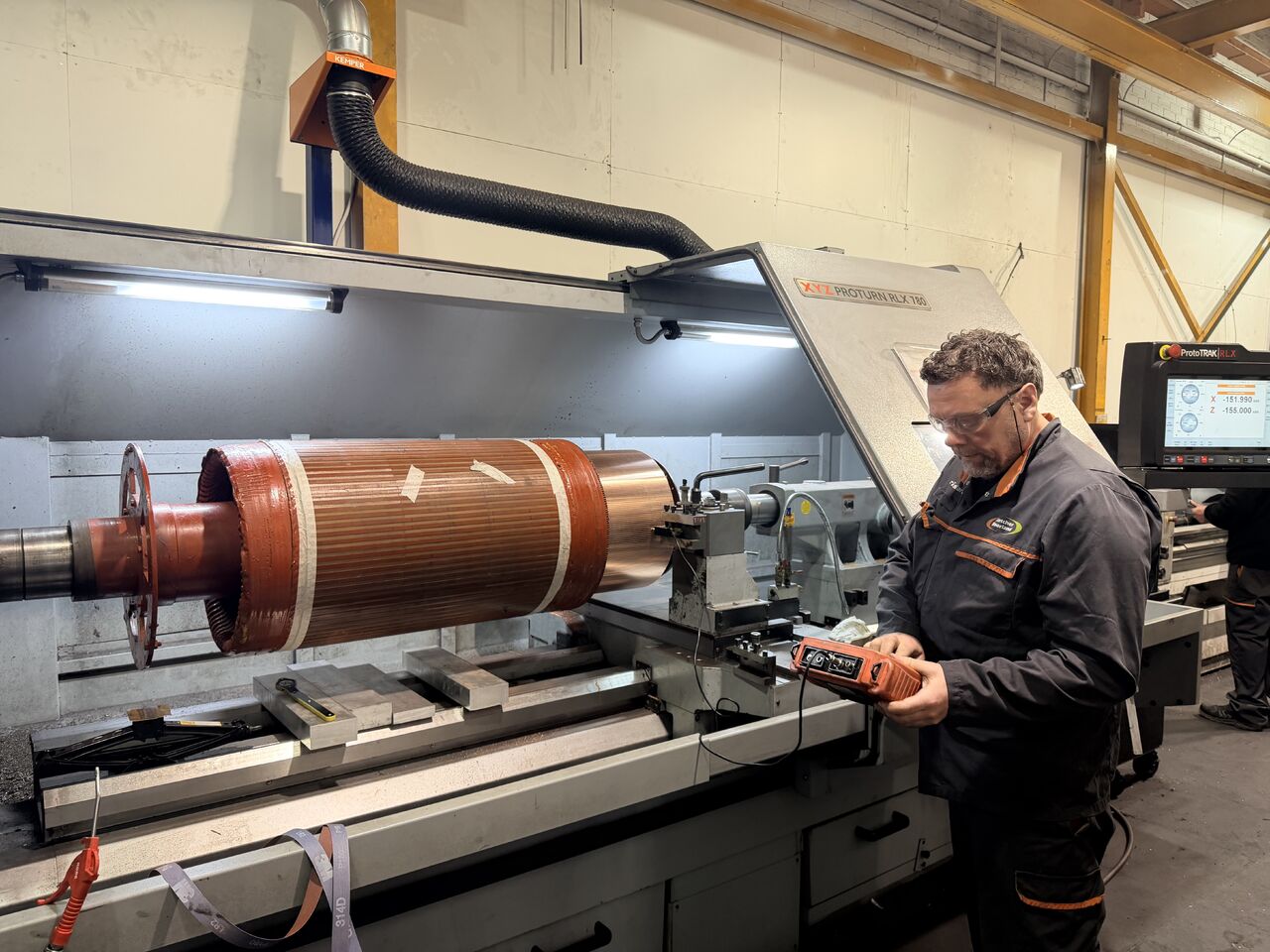
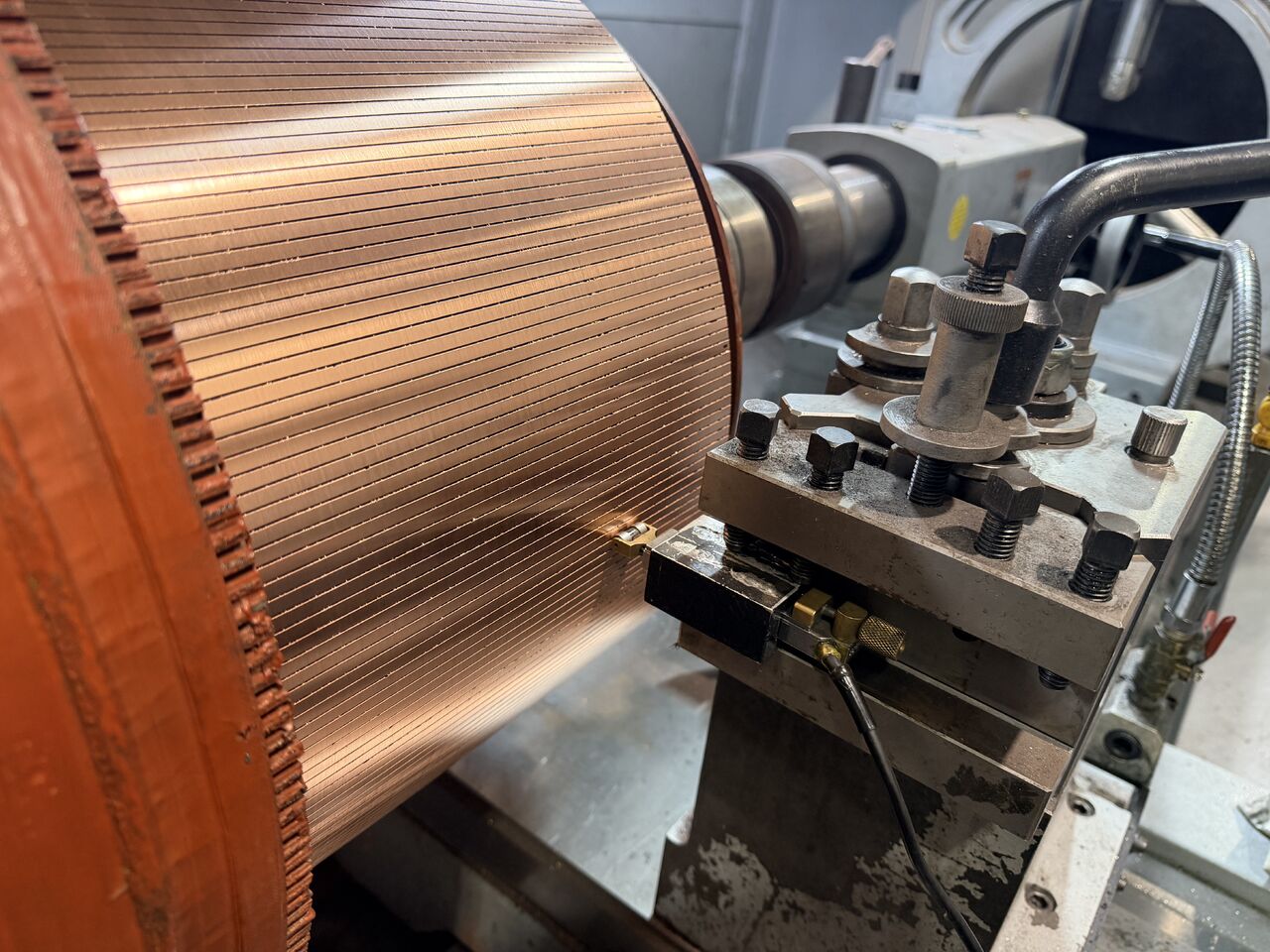
The skimming process, often called a 'comm skim and undercut', is carried out in a lathe and removes the irregularities in the commutator surface. The mica insulating layers between the segments are also undercut so they sit below the surface of the copper. The copper segments are then chamfered to allow a smoother surface for the carbon brush to run across.
All good electric motor repair companies will do this, however how do you know when it's been done well?
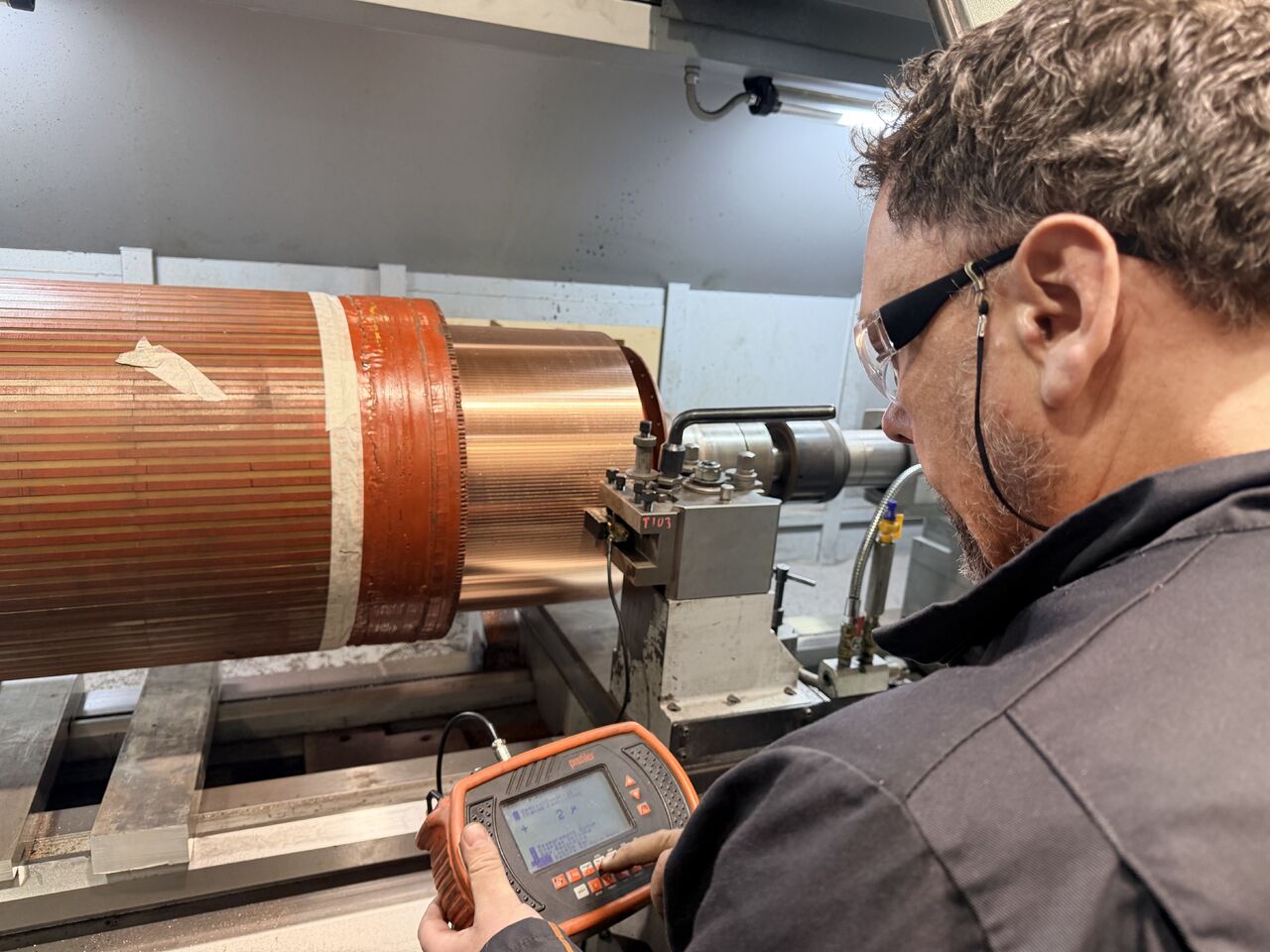
Chris here is using our commutator profiler to measure how good a job he's done in skimming the surface of this 800kW armature commutator.
A linear encoder measures the difference between the commutator bars and also measures the total indicated runout (TIR) Our standard is for a skimmed commutator to be less than 20 microns TIR. He's managed to get the TIR to 6 microns. A damn good job indeed.
If you get chance, why not take a look at the profile reports from the company who looks after your DC motors?
I find the before skimming and after skimming reports fascinating. The commutator, that looks to be a solid component, does actually change profile in service.
If you've ever experienced increased brush wear, it could be down to the surface of the commutator.
Contact Us
Please fill in the contact form to get in touch with us or contact us on the relevant channels below.
Fletcher Moorland Ltd.
Elenora Street
Stoke-on-Trent
Staffordshire,
ST4 1QG
Opening Hours:
Monday - Sunday: Open 24 hours


