
How’s your balancing act
correcting the imbalance
So, what is balancing?
Are any of you thinking about standing on one leg? balancing a broom on the end of your finger? or those idiots on a high-wire at the circus?
Well, they are all balancing in one way or another. The balancing I'm on about is rotor balancing, a crucial step in reliable electric motor repair and servicing. You may have seen or heard the phrase 'balance the rotor' but have you ever stopped to understand what it means?
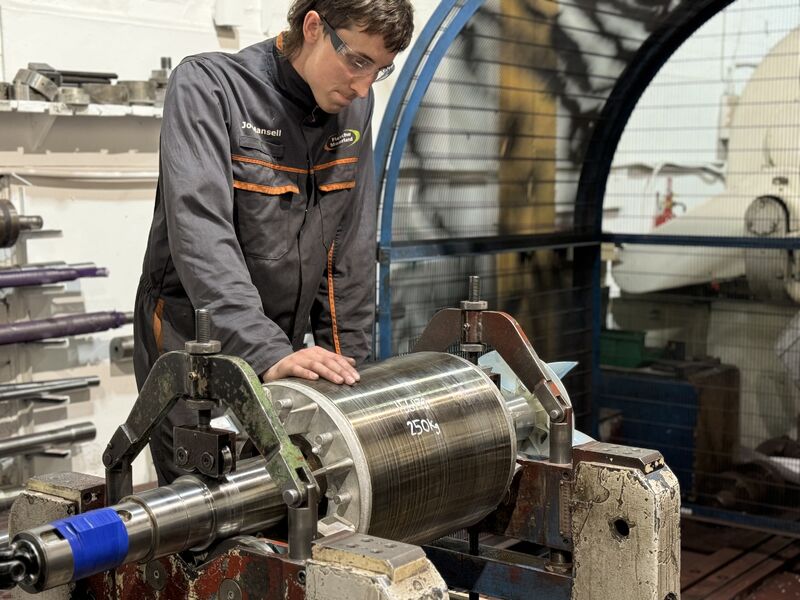
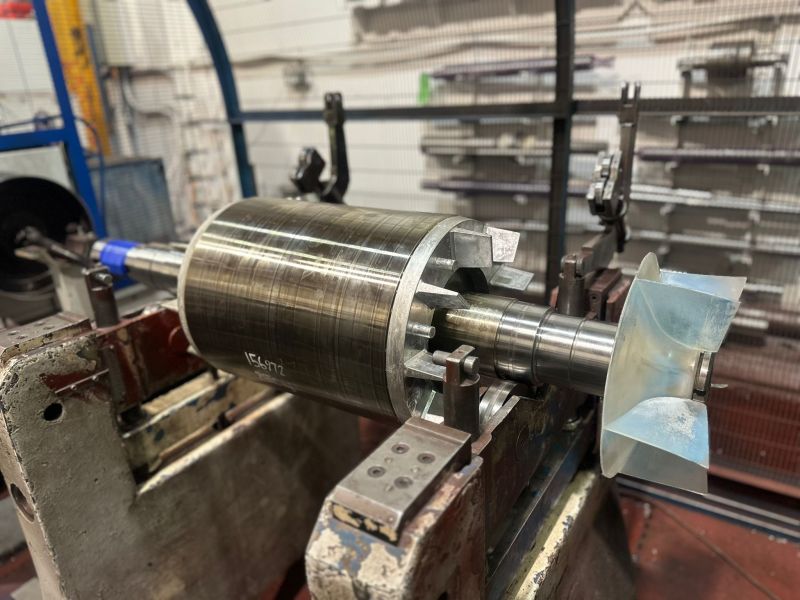
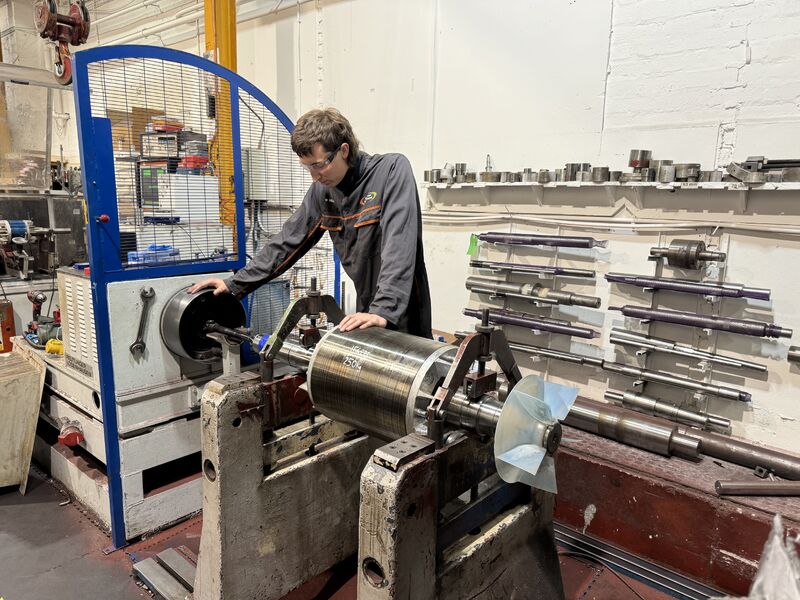
Let's take this 250kg rotor that Joe has in one of our balancing machines. In an ideal world, the weight would be distributed evenly throughout the rotor. We don't live in an ideal world though and there will be discrepancies in the weight distribution, there will be heavier-spots, and lighter-spots in the construction. This means that when the rotor is spinning, there will be vibration. imagine holding a cycle wheel and you set it off spinning, imagine now adding a full Coke can to the wheel and doing the same thing, you'll feel the effects as the heavy-spot spins around. That's the sort of thing that a bearing feels when a rotor is out of balance. Its why bearings fail when a rotor is out of balance.
CONTACT US
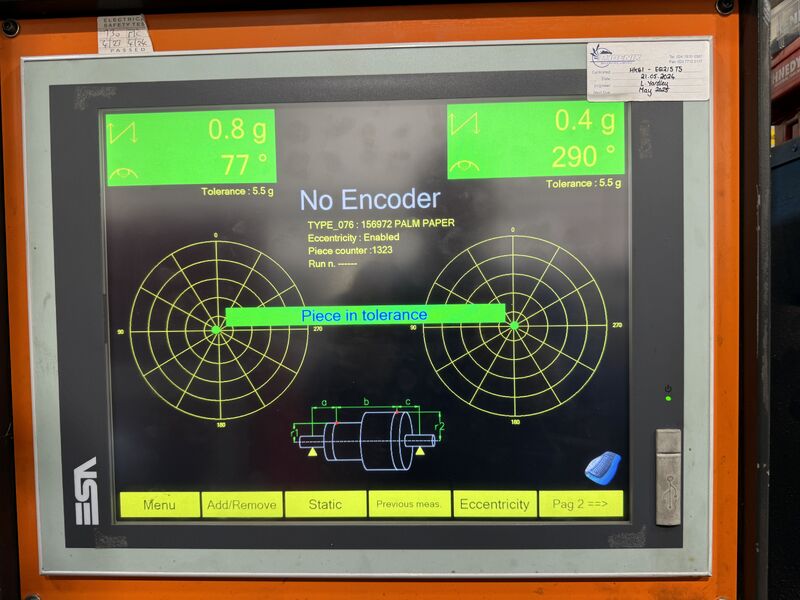
The way that we correct this imbalance is to either remove or add weight. You may have seen on your car wheels, there may be a small weight added to the rim of the wheel, that's the balancing correction weight. Let's say a wheel is fitted to a balancing machine. it's run up to determine the imbalance. The machine may say that there is a +30g imbalance at a 90-degree position. That means a heavy spot of 30g at 90 degrees as you look at the wheel. To correct this, you can either remove 30g of weight at that position, or, add 30g at 180 degrees opposite to counter the imbalance. It's often preferable to add weight, rather than remove, this is due to creating weaknesses in the wheel.
The same principle is used for rotors, fans, impellers, in fact anything that rotates. The whole reason for doing so is to reduce vibration which will improve the life of your bearings.
I do see and hear 'The rotor has been balanced'. This is an incomplete statement. Rotor balancing is covered by an international standard ISO 21940. There are differing balance grades. The better the grade, the better something has been balanced. A standard electric motor from most OEMs will be balanced to grade G6.3, batter than that is G2.5, better than that is G1.0. We balance all rotating elements at Fletcher Moorland to G1.0, we do that because it's the right thing to do. Reliability improves because of it, the wear on the bearings is less from the outset.
When you do get an electric motor repaired, check what balance grade the rotor has been balanced to. You should always get a balance certificate from the repairer too. You can improve reliability with a better balance grade.
Contact Us
Please fill in the contact form to get in touch with us or contact us on the relevant channels below.
Fletcher Moorland Ltd.
Elenora Street
Stoke-on-Trent
Staffordshire,
ST4 1QG
Opening Hours:
Monday - Sunday: Open 24 hours


