How Important is Measuring Your Bearing Fits?
How important is measuring your bearing fits?
The importance of measuring bearing fits correctly when it comes to electric motor repair and service.
Let's say you've sent an electric motor away for repair and service. You'd want to make sure that all of it has been checked thoroughly before it comes back to you.
There is a statistic thrown about in the electric motor industry, and, despite my (M.Fletcher) 40-odd years in and around the industry, I've no idea where it originated. That statistic is that 51% of electric motor failures are bearing related.
The bearing fits are, in my opinion, one of the most overlooked parts when it comes to a decent electric motor repair. Bearings are precision devices, they're really important when it comes to long-term reliability. So, when you're repairing and servicing an electric motor, you need to make sure the measurements are within specified ISO tolerances.
International Organisation for Standardisation (ISO) Measurements for Bearings
That's right, there are ISO tolerances to measure to. It's how these fits are measured that can directly impact the reliability of your repaired or serviced electric motor. These fits are measured down to micron levels. I've seen companies where someone will check with their finger to see if they can feel a groove! some that use a vernier, and even some that check with the old bearing to see if there is some movement. None of these are good enough as far as I'm concerned.
The Fletcher Moorland Way!
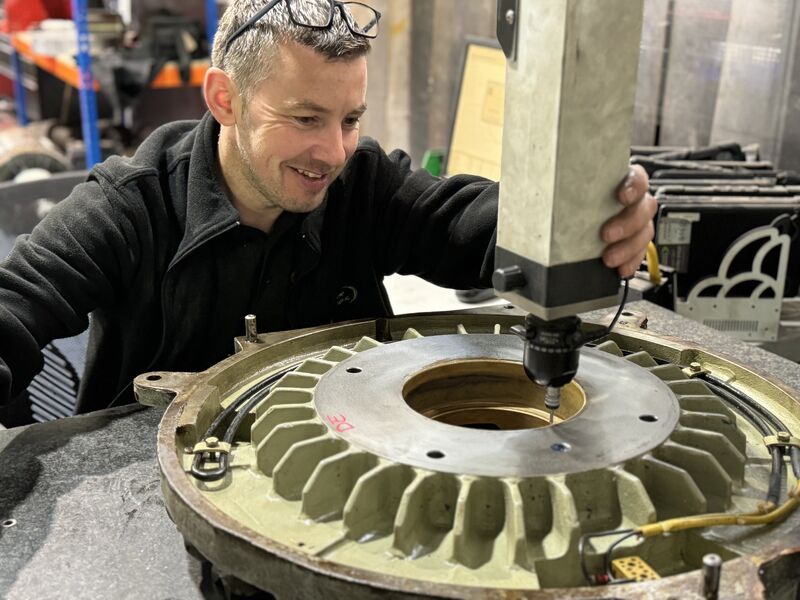
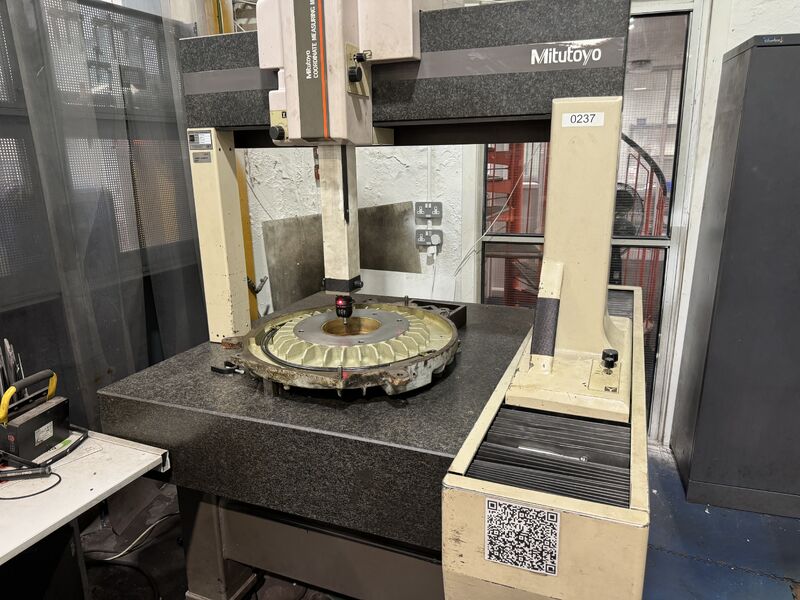
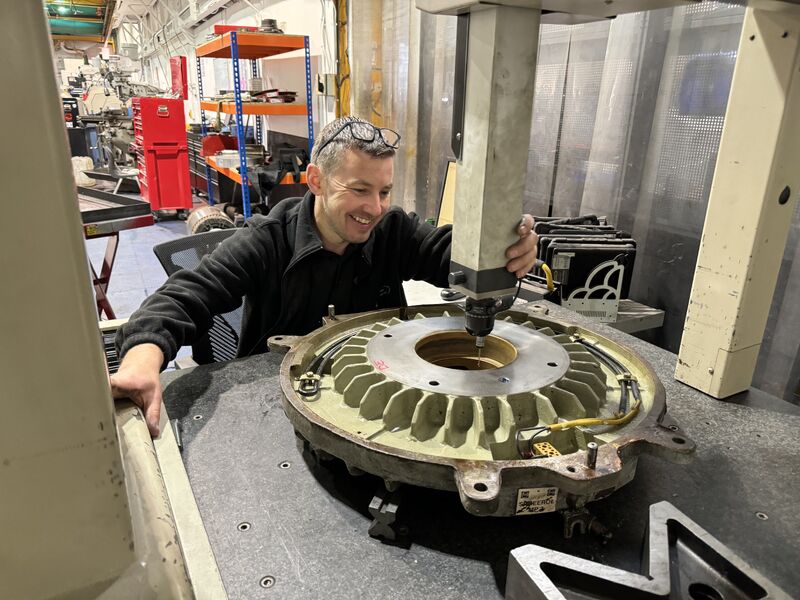
The way in which we do it at Fletcher Moorland, is to use a calibrated Coordinate measuring machine, a CMM. It can measure to 2-3 um and produce a report and drawing showing the fits. Johnathan, smiling of course because he's being photographed again, is measuring the bearing housings of a 230kW AC electric motor that we've had in for service. This one for the more eagle-eyed may see that the housing has a ceramic coating on the bore.
I'm not saying that this is the only way to do it. Just that it is one way, and we think it's a brilliant way. Three-point bore gauges, internal micrometres and even measurement arms can also be used successfully. The main thing is that it IS done.
Let's look at what would happen in service if the bearing fit is loose. The electric motor would of course run, but soon afterwards the outer race would move. There would be wear, there would be play, there would be vibration, the driven machinery maybe affected, the electric motor would be coming out again. Equally, if the fit was too tight. The bearing would be in distress. I won't go into performing well when balls being squeezed here though, but you get the point.
When bearing fits are measured and are correct, you get a longer lasting motor.
CONTACT US TODAY